Building an Italian Antipasto Board That Reads as Effortless
Composition principles for balancing cured meats, cheeses, marinated vegetables, and the interplay of fat, acid, and texture.
An antipasto board is not a haphazard assembly. It is a considered composition that balances fat, acid, and texture whilst inviting guests to graze at their own pace. The craft lies in selecting ingredients that speak to regional Italian tradition and arranging them so the effort dissolves into apparent ease.
The Architecture of Cured Meats
Begin with the salumi. Three to four varieties provide sufficient range without overwhelming. Prosciutto di Parma, aged twenty-four months, offers delicate sweetness and silken texture. Pair it with something more robust: a fennel-studded finocchiona from Tuscany or a peppery soppressata from Calabria. Speck, the smoked prosciutto of Alto Adige, introduces a subtle woodiness that cuts through richer cheeses.
Slice prosciutto and speck thin enough to drape and fold; cut harder salumi such as soppressata into quarter-inch rounds. Arrange them in loose folds or gentle waves rather than rigid stacks. The goal is to suggest abundance whilst allowing each slice to be lifted cleanly without disturbing its neighbours.
Cheese Selection and Temperature
Cheese anchors the board. Choose three: one aged, one soft, one semi-firm. Parmigiano-Reggiano aged thirty-six months brings crystalline shards of umami. Pecorino Toscano, younger and milder than its Sardo cousin, contributes a grassy sweetness. A soft cheese such as robiola or stracchino provides creamy contrast, its lactic tang playing against the salumi's salt.
Remove cheese from refrigeration sixty to ninety minutes before serving. Cold mutes flavour and hardens fat. Break or cut Parmigiano into irregular chunks rather than cubes; the rough surface catches light and invites fingers. Leave pecorino in a small wedge with a dedicated knife. Spoon soft cheese into a shallow bowl or leave it in its wrapper, halved to expose the paste.
Marinated Vegetables and the Role of Acid
Acidity cleanses the palate between bites of fat and salt. Marinated artichoke hearts, grilled courgettes, roasted red peppers, and sun-dried tomatoes all serve this function. Seek vegetables packed in olive oil with minimal additives—garlic, oregano, perhaps a thread of chilli.
Giardiniera, the northern Italian pickle, introduces crunch and vinegar brightness. Olives are essential: Castelvetrano for buttery mildness, Gaeta for brine and bite. Offer at least two types. Drain marinated vegetables well and arrange them in small clusters, allowing their oil to pool slightly without flooding the board.
Textural Counterpoints
Texture variation sustains interest. Toasted bread—preferably a country loaf or ciabatta, sliced and brushed with olive oil—provides a neutral base. Grissini, the pencil-thin breadsticks of Torino, add snap. Walnuts or almonds, lightly toasted, echo the nuttiness in aged cheeses and offer something to do between sips of wine.
Fresh fruit introduces sweetness and moisture. Figs, halved to reveal their seeds, are traditional. Ripe pear slices complement blue-veined gorgonzola if included. Grapes, particularly small, firm varieties, sit well alongside hard cheeses. Avoid melon unless serving prosciutto as a separate course; the pairing is canonical but belongs on a plate, not a crowded board.
Composition and Visual Flow
A successful board reads as effortless because its structure is invisible. Begin by placing cheeses at three points, forming a loose triangle. This distributes focal weight and prevents guests from clustering. Tuck salumi into the gaps, folding or fanning to create gentle peaks and valleys.
Cluster vegetables and olives in small bowls or ramekins to contain their liquid. Nestle these vessels between cheeses and meats. Scatter nuts and fruit in the remaining spaces, using them to fill gaps and guide the eye. Tuck herb sprigs—basil, rosemary—into crevices for colour, not flavour; they wilt quickly and are rarely eaten.
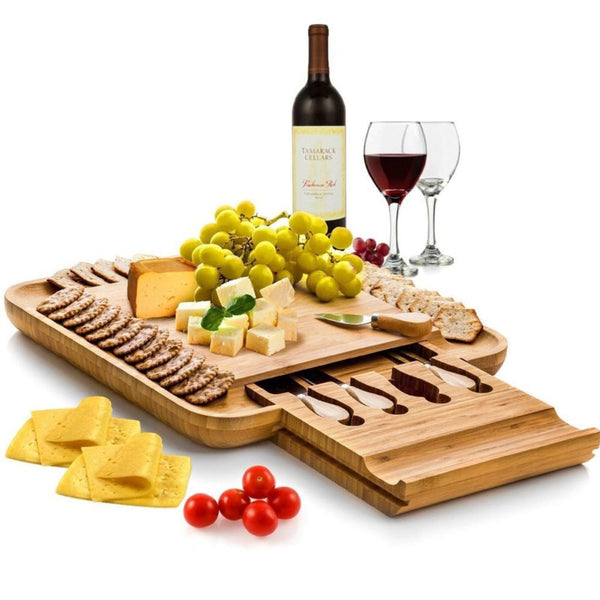
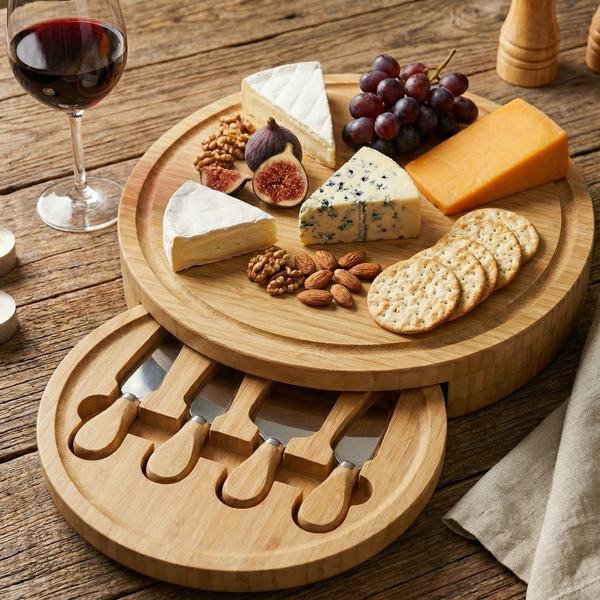
The board itself matters. Wood, marble, or slate each bring different character. Wood feels warm and rustic, marble cool and refined, slate dramatic. Avoid surfaces that crowd the ingredients or demand attention. A Wudy Kitchen board offers enough surface area to let each element breathe without sprawling into disorder.
Serving Order and Replenishment
Set the board on the table fifteen minutes before guests arrive. This allows cheeses to reach proper temperature and signals readiness without hovering. Provide small knives for each cheese and a spoon for soft varieties. Toothpicks or small forks near olives and marinated vegetables prevent fingers from diving into shared oil.
Encourage guests to begin with lighter elements—vegetables, mild cheeses—and progress toward richer salumi and aged cheeses. This is suggestion, not prescription; the beauty of antipasto is autonomy. Replenish sparingly. A board half-consumed looks inviting; one pristine or overstuffed feels either untouched or gluttonous. Add bread and refill small bowls as needed, leaving the main composition intact.
The measure of an antipasto board is not complexity but coherence. Each ingredient should justify its presence through flavour, texture, or contrast. Restraint in selection allows quality to emerge. What remains on the board after an hour tells the story: empty spaces where pleasure was taken, a few stray olives, a rind of cheese. That ease, that absence of ceremony, is the point.