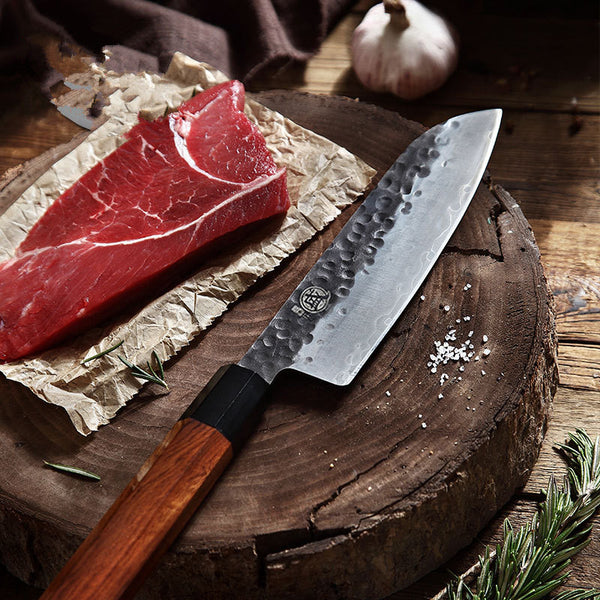
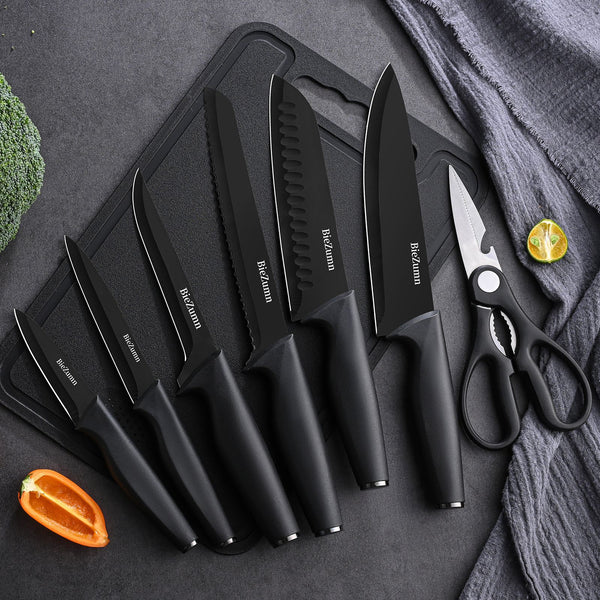
Best First Kitchen Knife to Buy (One Blade, Not a Full Block)
Buy one primary chef’s knife or santoku you will use nightly. Skip Damascus slogans and dusty sets — add specialists only when a cut repeats.
Your first kitchen knife should be the one you reach for every night — not a full block “for someday.” Buy one honest primary blade, learn to hone it, then add specialists only when a cut repeats.
In brief
Start with one chef’s knife or santoku that fits your wrist. Skip Damascus slogans. Add deboning or steak knives only after the primary blade earns daily use.
Also: Full knife block — usually no until the primary blade earns daily use.
Also: Bread knife only after the primary blade earns daily use.
Also: Serrated steak knives only after the primary blade earns daily use.
One primary blade beats a dusty set
Sets look complete; most pieces stay unused. If you already own a crowded block, inventory what you touch — what you actually use from a German set. New cooks: one blade first, storage second — how to store kitchen knives.
Chef’s knife or santoku
Western chef’s knives rock through denser work; santoku favors flat push cuts and a shorter tip. Choose by motion, not marketing — santoku vs chef’s knife. Full decision tree: home chef knife guide.
What to ignore on day one
Layer counts, “German vs Japanese” slogans without a shape pick, and gift boxes you will not open. Forged vs stamped is secondary — forged vs stamped. Gifting a santoku is fine when the recipient cooks — is a santoku a good gift.
Second and third blades (later)
Poultry sockets → deboning profile — what a deboning knife is for. Worn primary that will not hold an edge → replace, do not multiply — when to replace a kitchen knife. Maintenance: honing vs sharpening.
Clear first buys
Gift-ready single blade: santoku gift box. Full station if you want block + board together: 16-piece German knife set. Browse Master Series knives.